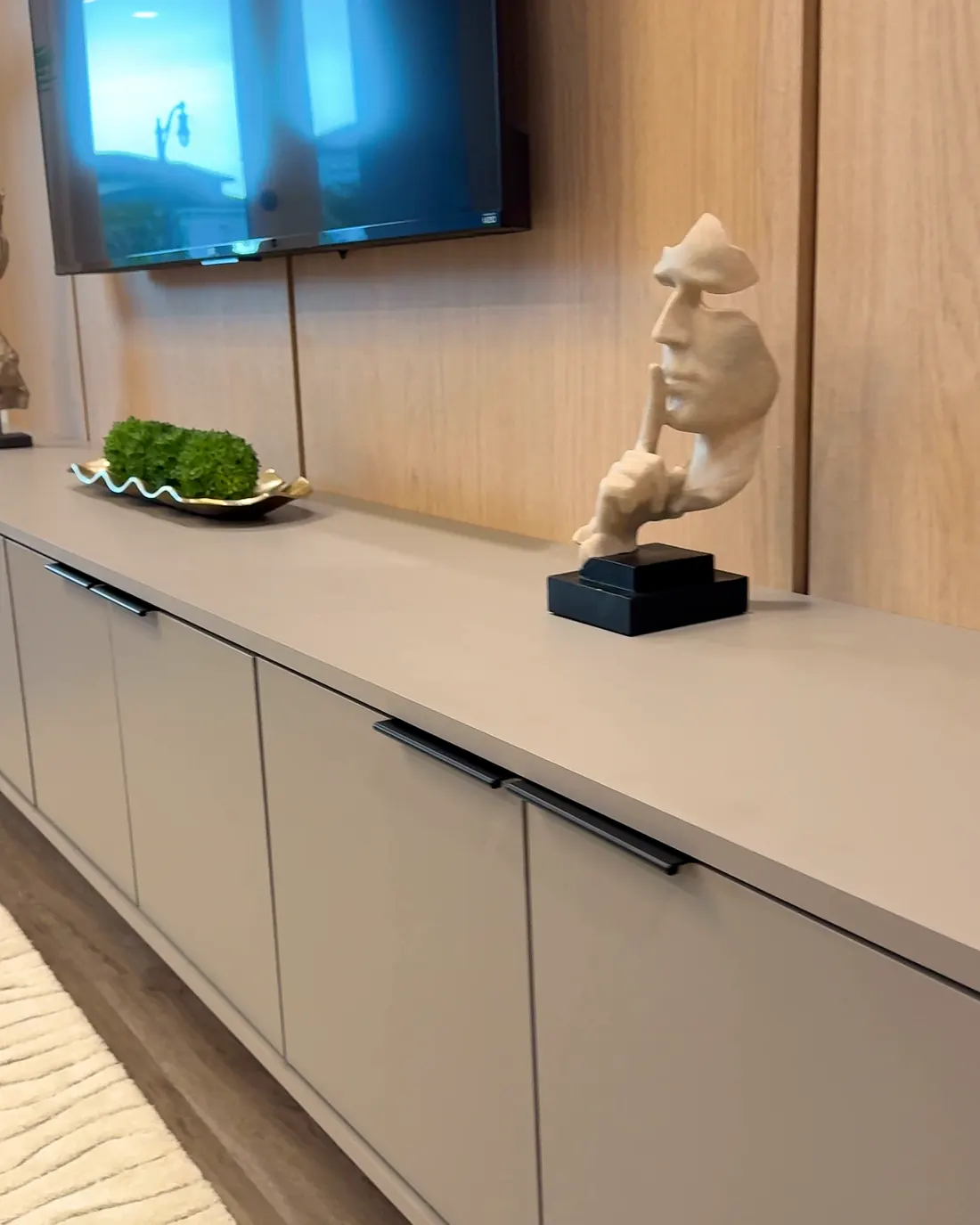
The seven things that set the price of a custom media wall, where you can save without it looking cheap, and how to get a fixed price you can trust.
"How much does a media wall cost?" is the first question almost everyone asks, and the honest answer is that it depends on a handful of specific choices. Two walls that look similar in photos can differ a lot in price because one hides a full built-in cabinet, solid blocking and lighting, and the other is a few panels and a TV mount.
This guide explains the seven factors that drive the price, where you can save without the wall looking cheap, and how to compare quotes so you are not surprised later.
1. Size of the wall
Wall width and height set the amount of material and labor. A wall that runs floor to ceiling across a 14-foot great room uses several times the material of a 6-foot section behind the TV. Tall ceilings also add time, because panels need scaffolding or ladders and more careful seams.
Ways to save: treat only the center section behind the TV, and paint or leave the sides plain. The result still reads as a feature wall.
2. Panel material and finish
Material is one of the biggest swing factors:
- Paint-grade panels (MDF or primed panels) are the most affordable and easy to match to your wall or trim color.
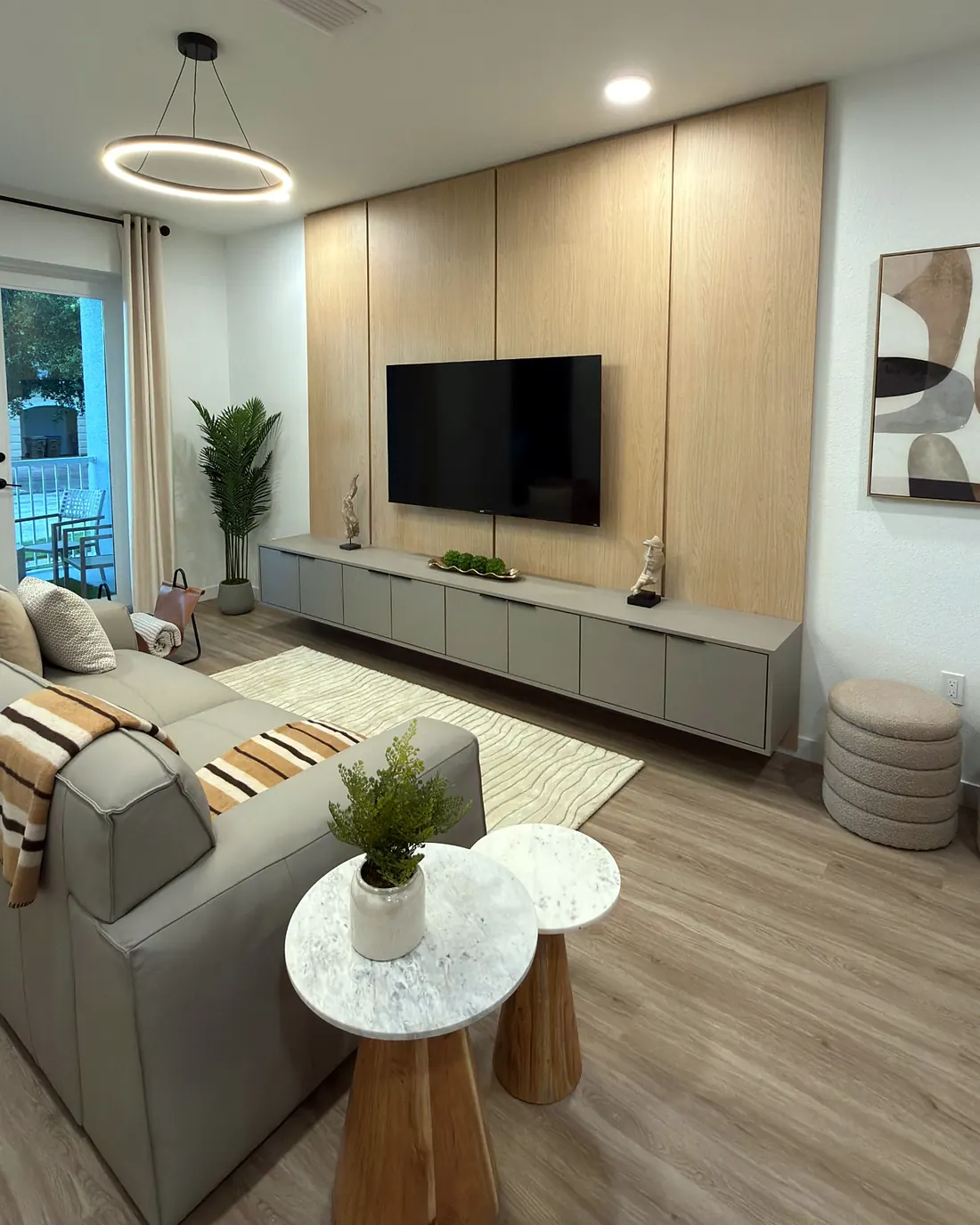
- Wood veneer panels such as white oak or walnut cost more and need careful grain matching across seams.
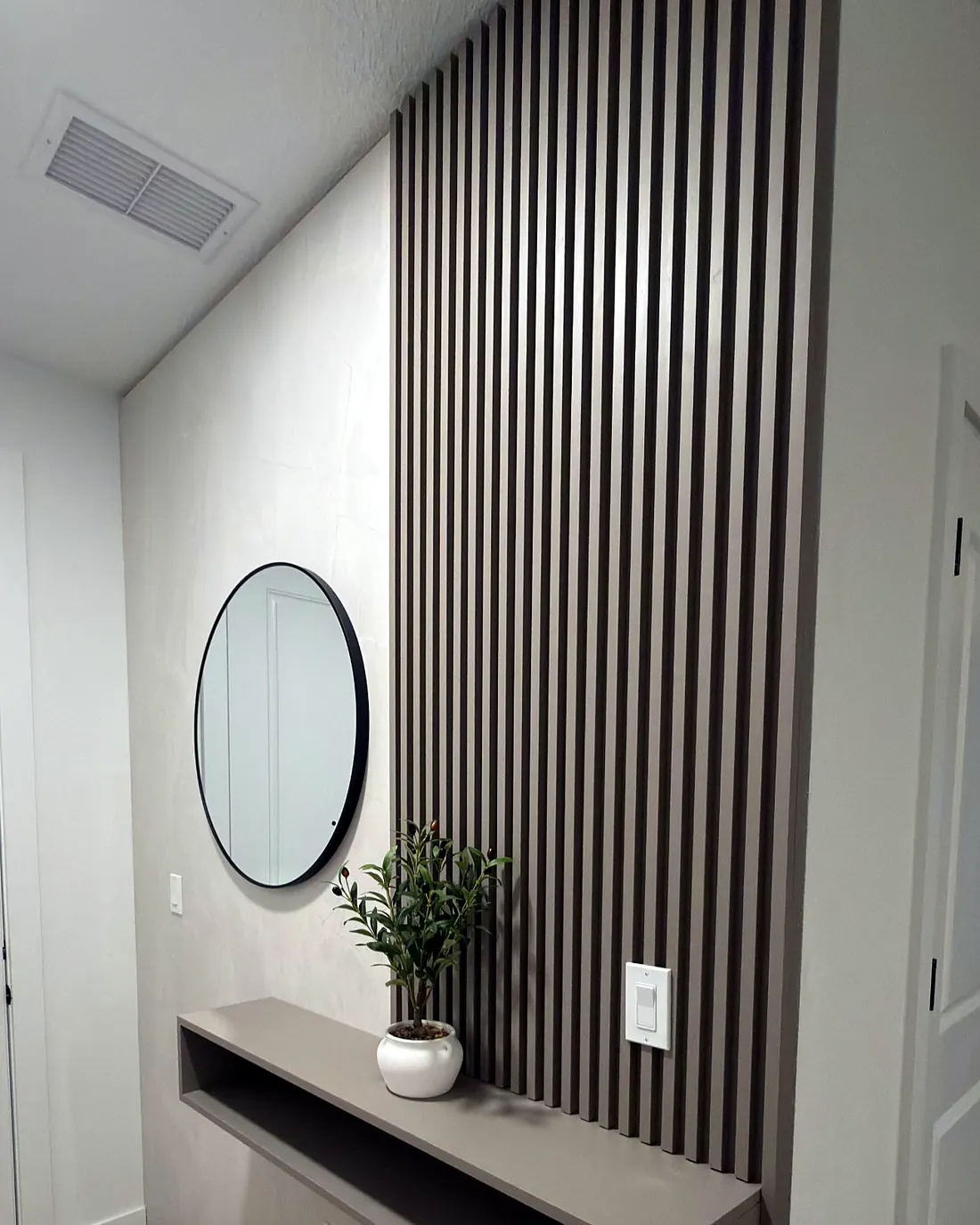
- Solid wood slats are usually the most expensive per square foot, and they take longer to install because every slat is placed and spaced individually.
Pre-finished products save labor on site. Panels that are painted or stained after installation cost more labor but give a seamless result.
3. Storage: floating cabinet, built-in or none
Storage changes the budget more than anything else. A wall-mounted floating cabinet adds a moderate amount. Full-height built-ins with shelves, doors and drawers on both sides of the TV can cost more than the paneling itself, because they are essentially custom furniture fitted to the room.
4. Lighting and electrical
Hidden LED strips, shelf lighting and a new outlet behind the TV all add cost, partly in materials and partly because a licensed electrician must handle any new wiring. Planning this before the build is much cheaper than cutting into a finished wall later.
5. Fireplace
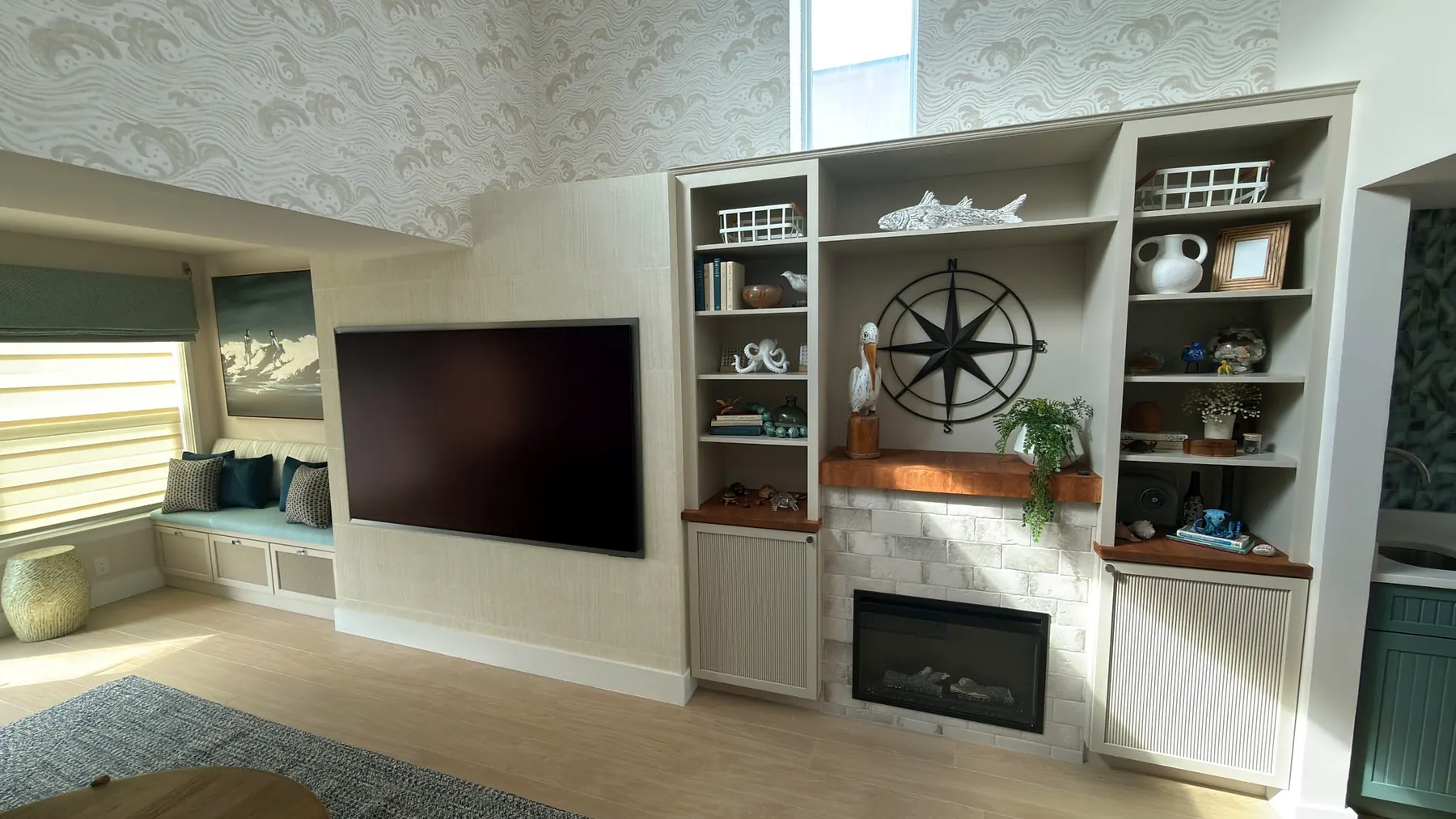
An electric fireplace insert adds the unit cost plus the framing, mantel and surround around it. It also affects TV height, so it should be designed together with the rest of the wall.
6. Condition of the existing wall
Out-of-plumb walls, uneven floors and odd outlet locations all add time. A good installer measures for this at the site visit and includes it in the price, instead of discovering it on install day and adding a change order.
7. Design and detail level
Clean reveals, mitered corners, scribed edges against uneven walls and returns around outlets are what separate a high-end wall from an average one. They take time. When two quotes are far apart, the difference is often in these details.
Where to save, and where not to
Good places to save: a smaller treated area, paint-grade panels instead of veneer, a floating cabinet instead of full built-ins, standard cabinet hardware.
Places not to cut: blocking behind the panels, the TV mount, and layout time. A wall that looks perfect but has a sagging cabinet or a crooked slat line six months later costs more to fix than doing it right the first time.
Tip: Ask every contractor what is included: blocking, cable paths, finishing, hardware, clean-up and disposal. A lower number that leaves these out is not cheaper in the end.
How to get a price you can trust
- Get a site visit, not a phone estimate. Measurements and wall conditions change the price.
- Ask for a written, fixed-price proposal with the scope, materials and timeline spelled out.
- Ask how changes are handled. Changes should be agreed in writing before the work is done.
- Look at past work up close, especially corners, seams and edges against the ceiling.
A walkthrough of three common budget levels
To make the factors above concrete, here is how three typical projects differ. These are descriptions of scope, not prices, because every room is different.
Entry level: feature panel and floating cabinet
A painted panel section about the width of the TV plus a little on each side, a wall-mounted floating cabinet, and cables routed inside the wall. This is the most affordable way to get the media wall look, and it suits apartments, bedrooms and smaller living rooms. Most of the cost is in the cabinet and the careful layout around the TV.
Mid level: full-wall panels or slats
Wood veneer panels or slats covering the whole wall, a longer floating cabinet, blocking for the mount and cabinet, and a hidden LED strip. This is the most popular level because it transforms the room without the cost of full cabinetry. Most of the extra cost compared with entry level comes from material and the time to lay out and fit a full wall.
Premium: full built-in media wall
Floor-to-ceiling cabinets and shelves on both sides of the TV, an electric fireplace with a mantel, lighting in the shelves, and a stained or painted finish applied after installation. This is custom furniture for the whole wall. It takes the longest to design and build and it has the highest price, but it also adds the most storage.
Hidden costs to ask about
- Electrical work: new outlets, recessed boxes and lighting power are done by a licensed electrician and are often quoted separately.
- Wall repairs: removing an old TV mount or shelves can leave holes that need patching first.
- Baseboard changes: baseboard may need to be removed and reinstalled where the panels meet the floor.
- Paint touch-ups: adjacent walls sometimes need paint after the work.
- Disposal: packaging, offcuts and old materials need to leave the house.
- The TV mount itself: confirm whether the mount is included and that it suits your TV's weight and size.
DIY vs professional
Peel-and-stick slat kits and pre-made panels have made DIY accent walls popular, and for a simple bedroom wall they can work. Media walls are different: the TV mount needs solid backing, cables need a safe path, and the layout must line up with the screen, outlets and both edges of the wall. Mistakes are visible every time you watch TV. If you are handy, a simple painted panel wall is a reasonable DIY project; a wall with a mounted TV, a floating cabinet and lighting is usually worth hiring out.
How long the quote is good for
Material prices change, especially for wood veneer and hardwood. Ask how long the proposal price is valid and when the materials will be ordered. Once you accept, ordering materials early protects your price and your schedule.
Planning a budget
Start by choosing the size and storage level you need, then pick the material. If the first proposal is above your budget, the fastest way down is usually reducing the treated area or the amount of storage, not cheaper materials. We are happy to price two versions so you can compare.
See our media wall service or browse 12 media wall ideas to narrow down the style first. When you are ready, request a free site visit and we will give you a fixed price in writing.
Common questions
Why do media wall quotes vary so much?
Quotes differ because of the treated area, material, storage, lighting and the level of detail. A lower quote may leave out blocking, cable paths, finishing or disposal. Compare what is included, not only the total.
Is a media wall cheaper than a built-in entertainment center?
Usually, yes. Paneling with a floating cabinet costs less than full built-in shelving and cabinets, because built-ins are custom furniture fitted to the room.
Does a media wall add value to a home?
A well-built media wall makes a living room more appealing in photos and showings. It is a design upgrade more than a guaranteed return, so choose a style buyers in your area would also like.
Do you give fixed prices?
Yes. After a free site visit you get a written proposal with the scope, materials, timeline and a fixed price.