What each option costs, how it ages, and where each one makes the most sense in your home.
Before we design a bookcase, media wall or window seat, one decision shapes almost everything else: will it be painted or stained? Both can look great. They just suit different rooms, budgets and styles.
What paint-grade means
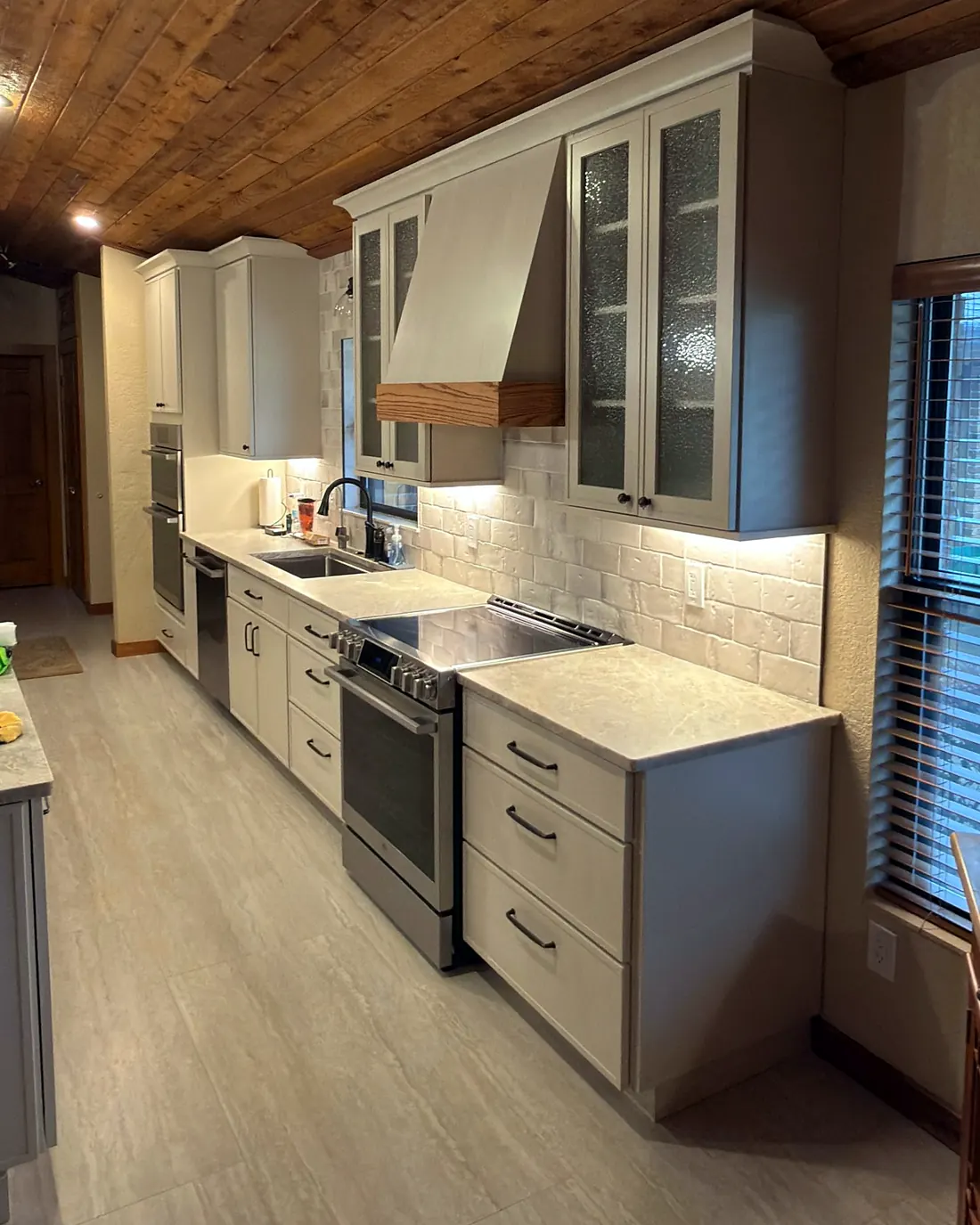
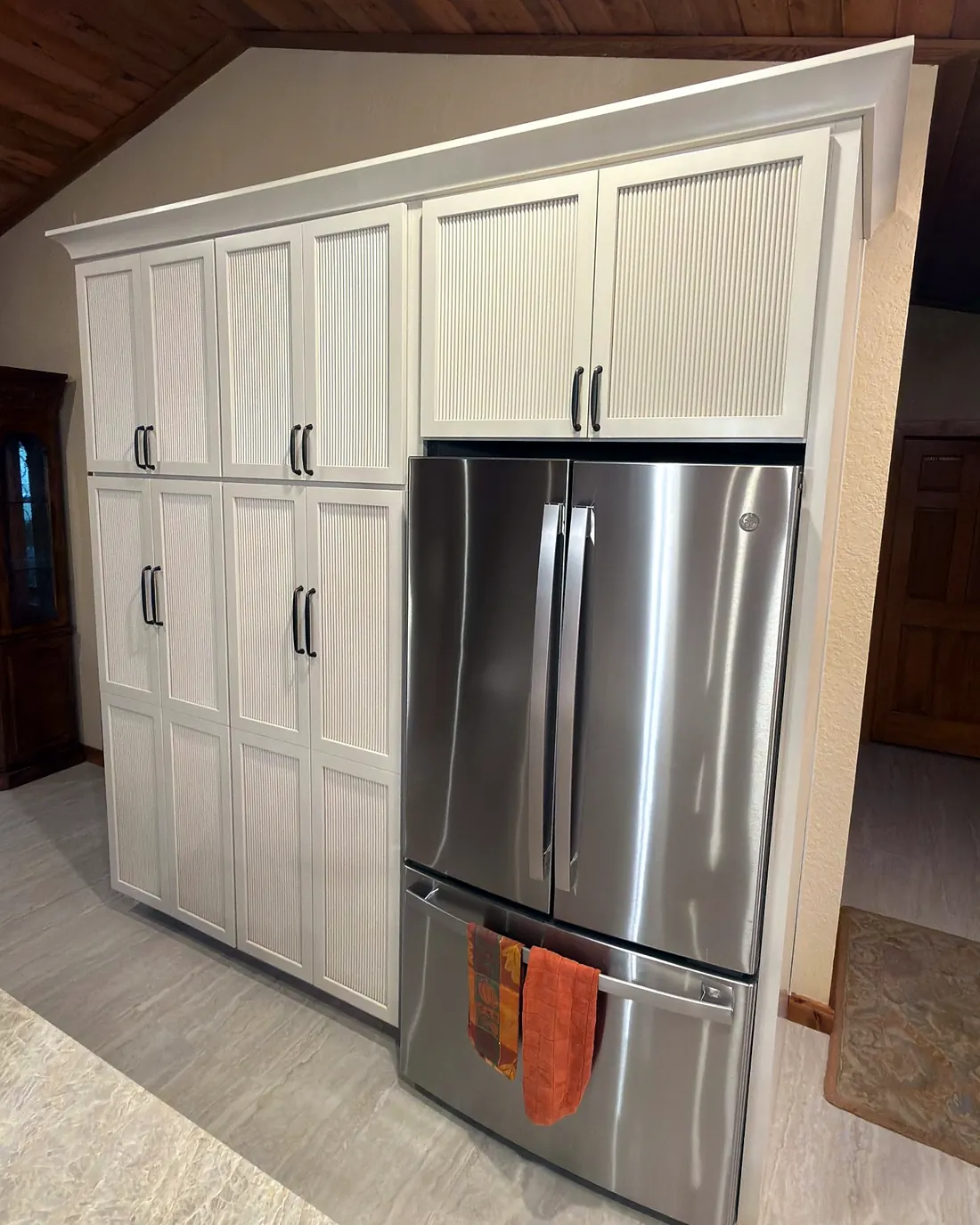
Paint-grade built-ins are made from materials chosen for a smooth, stable surface, usually cabinet-grade plywood or MDF panels with poplar or similar hardwood for face frames and edges. Every joint is filled, sanded and painted, so the finished piece looks like one solid unit.
- Best for: modern, coastal and transitional homes, and rooms where the built-in should blend into the walls.
- Strengths: clean lines, easy to match wall or cabinet colors, and simple to touch up or repaint later.
- Watch for: painted edges can chip in high-traffic spots like mudroom benches, so a durable cabinet paint matters.
What stain-grade means
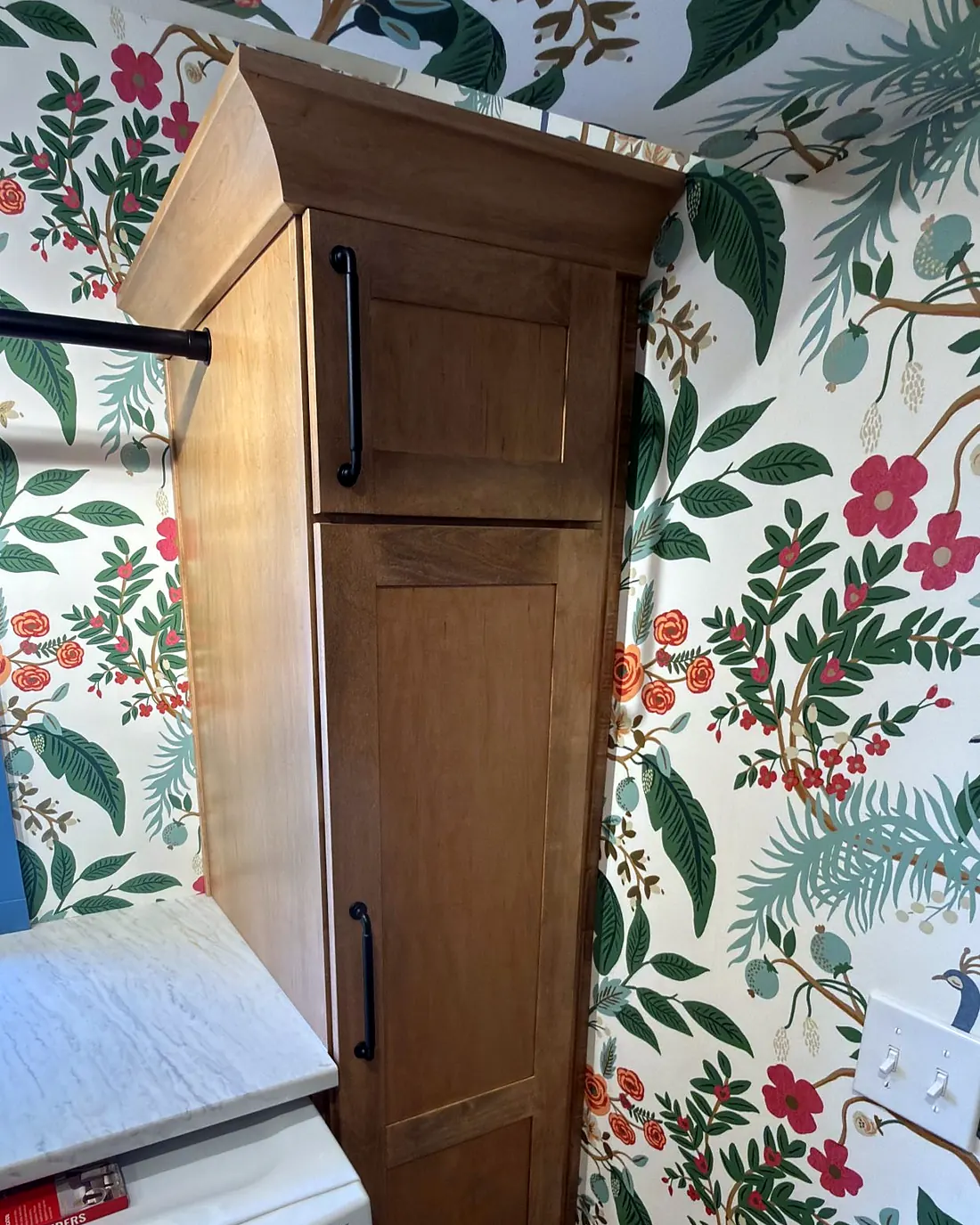
Stain-grade built-ins show the wood itself, such as white oak, walnut or maple. Panels are veneered plywood, and solid wood covers the edges and frames. Because the grain stays visible, the boards have to be selected and matched, and joints cannot be hidden with filler.
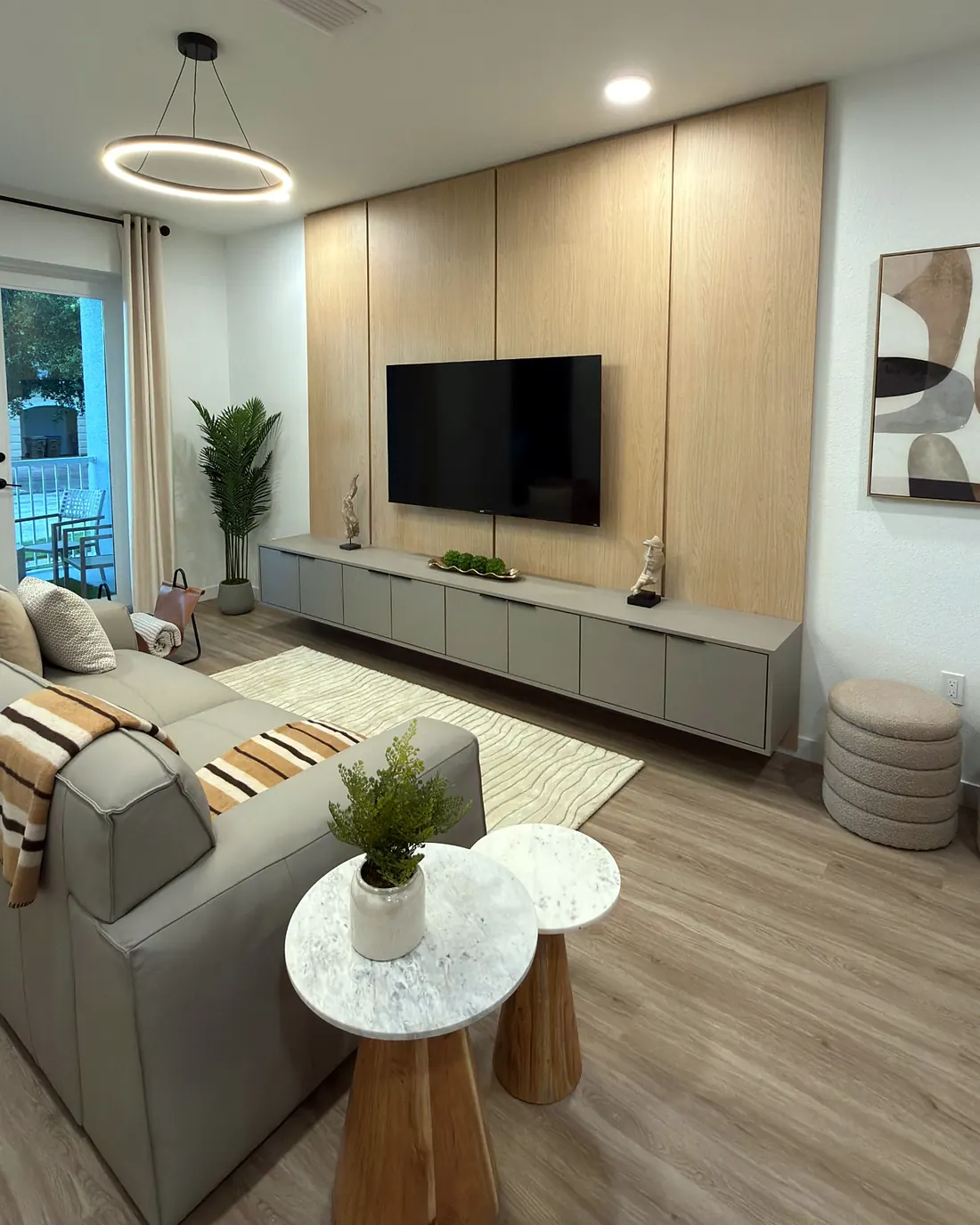
- Best for: offices, libraries, media walls and rooms that need warmth.
- Strengths: natural depth and texture, and a timeless look that pairs well with modern furniture.
- Watch for: higher material cost and more labor, since every joint and grain direction shows.
How they compare on cost
Paint-grade is usually the more affordable option because materials cost less and small imperfections can be filled before paint. Stain-grade takes more careful material selection and more hours to fit cleanly. The exact difference depends on the size of the piece and the species of wood, so we price both in the proposal when you are unsure.
You can mix both
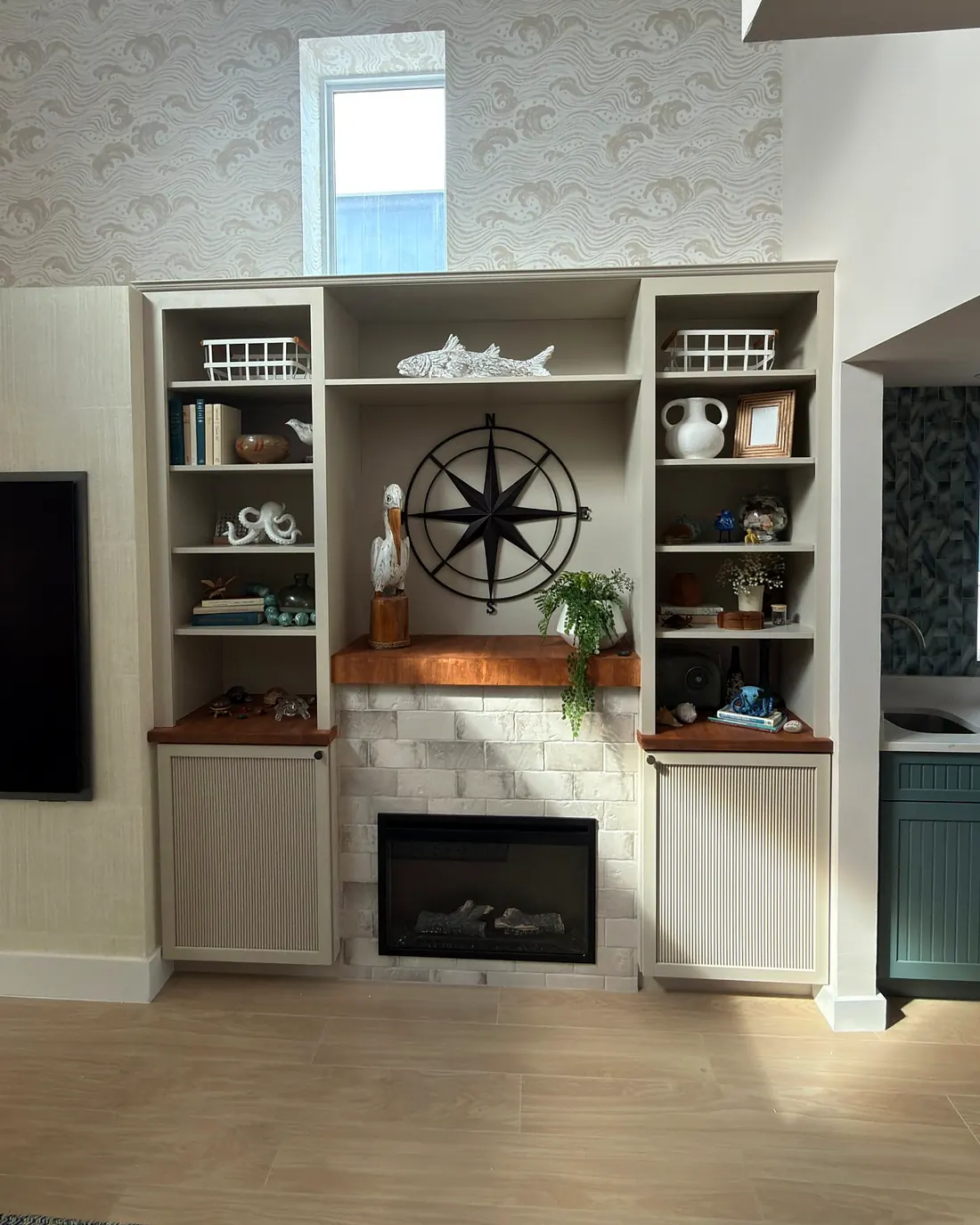
Some of our favorite pieces combine the two: painted cabinets and shelves with a stained wood top, mantel or countertop. It keeps the built-in light and bright while adding a warm accent where hands touch it most.
Tip: Look at the floors and any existing wood in the room before deciding. A stained built-in that clashes with the floor tone often looks worse than a painted one.
Not sure yet?
Bring a few inspiration photos to the site visit. We will look at your light, flooring and furniture and tell you which option fits the room best.